Among major historians who’s work redefine how we understand the subject, very few are household names. Except one – Niall Ferguson. The Scottish-born, Oxford educated, Senior Fellow at the Hoover Institution is known by most people with even a minor interest in history. One of the title’s published under his name is ‘Civilisation: The West and The Rest’. Which seeks to explain the comparative rise and eventual domination of the Western world. Since that publication, many have lauded the title as ludicrous, factually lacking and rather ignorant.
Citing examples of the Ottoman Empire and Ming to (Early) Qing China, many historians (and pseudo intellectuals like ourselves) have attempted to dismantle this idea of ‘The Rest’ through suggesting that such societies were just as advanced, if not more advanced than the West, at least until the 19th century. It is largely now a lauded idea as one of neo-imperialist, ignorant thought. However, are these criticisms fair and just? Can the West’s rise to dominance be explained away, kept to the confines of the late eighteenth to nineteenth centuries? I think not. In this, I shall explain the reasons for Europe’s rise, and then explain just why the East did not follow suit.
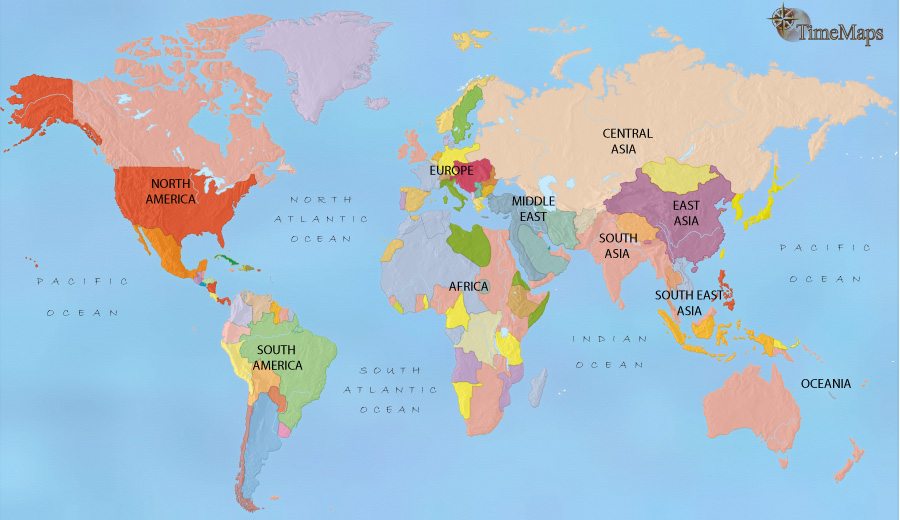
The West’s dominance of the rest of the globe is very much a self evident fact. By 1914, Europe controlled a vast majority of the globe’s surface, with Britain alone controlling a quarter of it. With much more under their influence. Had Spain not lost the majority of it’s colonial possessions after Napoleon’s conquest, it is possible most of Latin America would also be under Europe’s thumb. Such mastery of landmasses and people’s, who are clearly not racially inferior (despite Victorian ‘Darwinian Science’) cannot have come merely by chance, nor through the short term. Whilst it is true, that true European mastery did not come until (at the earliest 1815), the foundations and causes of this can be traced much farther.
According to Niall Ferguson, there were Six ‘Killer Applications’ that led to the dominance of the continent. These were; Competition (both within and between states), Scientific Advancement, Property Revolutions, Medicinal Advancements, Consumption, and Work (particular focus on work ethic). Within this essay, all six of these shall be touched upon.
In 1453, the final beacon of the Roman Empire, Constantinople, fell to the Ottoman Empire. The latter saw themselves as the direct successors (as opposed to the continuation of) their predecessor. It was said that news of the conquest led to grown men falling to their knees crying in the streets of Renaissance Rome. However, perhaps the two countries most affected by this were Spain and Portugal. Both of which were, by most accounts, provincial backwaters, devastated by centuries of ‘Reconquista’. The whole affair created a society of religious intolerance, and a particular hatred of Islam. Following the 1469 unification of Castile and Aragon, the political unit of ‘Spain’ was created for the first time.
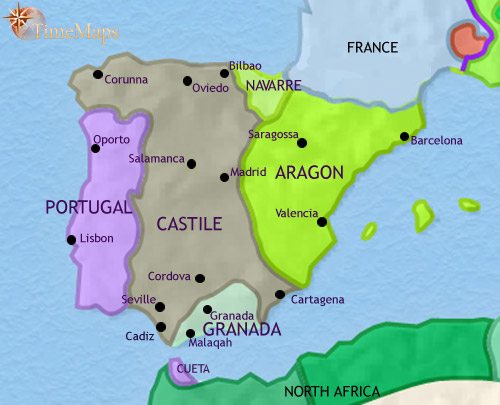
This religious fervour created a hatred of the fact they had to trade with Muslims for the goods of the East that were infinitely popular (and draining on finances) for European states. Muslims had direct control over part of the Silk Road, and to Spain and Portugal; that simply was not acceptable. The quest to find a new route to the east had begun.
Christopher Columbus’ journey is largely well documented and so there is little need to reiterate it. But, by 1498; the Americas had been discovered and a new route to India, by sailing around the coast of Africa, had been found by Portugal. Seemingly overnight, the horizon of these two Kingdom’s brightened. And more importantly – the potential of the treasuries became infinitely larger.
One key aspect of this era to understand is that China did not become the weak and powerless state that one associates with European Colonialism immediately; and that it was actually a strong state. However a strong China does not necessarily mean that Europe could not manipulate it. In fact, it very much did. China’s society at the time placed a far greater value on silver than gold. Which enabled for Europeans to buy goods from China with silver, the weaker currency to them, and then sell them for ridiculously high profits back on the continent.
However, despite some Venetian and Ottoman prophetic worrying; this did not spell the end of their trading empires. Travelling this distance was both expensive and risky. Profitable businesses could go under overnight merely through one storm, or poor navigation. For a long time to come, Venice and the Ottoman’s would retain considerable sway upon the Silk Road trade. The West, in this period, was by no means dominant. However, this would all change; as Europe turned to colonisation.
Colonisation only really started around the 17th century. Originally beginning as an economic venture – seeking to grow crops like tobacco and sugar cane that became sought after and desired by Europe. Such plantations required (particularly in the case of Tobacco) workers. Gone were the days of short campaigns from Conquistadors, ravishing the land and taking anything valuable that wasn’t nailed down, this operation required a permanent settlement. And thus came the indentured workers (people who gave themselves to a master for a set number of years on a paid wage, who would then be ‘released’), and slavery. However colonisation, and by extension trading empires, really took off with the Dutch.
Gaining independence from the Spanish in 1648, the Dutch had all the tools required to become a dominant colonial empire. Unlike other states, it was densely populated, and filled with artisans. A melting pot of different religious sects, it cared little for religious conversion; only the bottom line. Having been the Spanish’s primary cartographers and masters of navigation, it was in firm stead to travel abroad. It’s free and fair society brought some of the finest minds into its borders. It is these factors that saw it become the dominant power in the late 17th century. Part of this, saw the creation of a financial credit system, and the creation of monopoly trading companies. And it is here where the West truly begins to excel at the expense of the East.
The Trading Company was a radically new idea. Create a state-funded company, financially driven by individual shareholders, and give it a state monopoly on a region to ensure it can stay afloat. The most famous of this is the VOC – Dutch version of the East India Company. The Dutch’s treasury grew and grew. Aided by Dutch focus on building more efficient ships that needed fewer crew (without compromising its defensive abilities), allowed them to send ships all across the globe to gather goods in the name of profit. The fact they remained profit-focused and ignored religious conversion is also key. This worked so well in their favour, that the Dutch eventually became the only country Tokugawa Japan was willing to let into Nagasaki and trade with.
Not only this, but the Dutch followed the Spanish example of taking useful landmasses for themselves. Where the Spanish had taken the Philippines (allowing a stop-over point between South America and Asia via the Pacific), the Dutch took control of South Africa. It is here where the fortunes of the Ottoman’s collapsed. Europe could now act independently from it, and took full advantage of this. It is no surprise that what is generally considered to be the beginning of Ottoman ‘decline’ comes in 1683 – following the unsuccessful Siege of Vienna – mere decades after Dutch independence.
There was one other state that could be considered to have similar fortunes as the Dutch – with a focus on ship building, a dense population and with lots of artisans; England (hereby referred to as Great Britain as the union of the Scottish and English crowns had already occurred). However, it had been shaken by political uprisings and revolution. The Civil War can somewhat be considered to have hamstrung the British for a considerable amount of time. Furthermore, they did not have the same highly advanced banking system of the Dutch. While the Thirteen Colonies continued to grow and be populated, Britain’s colonial empire beyond America was limited and not very profitable, despite Charles II’s best efforts.
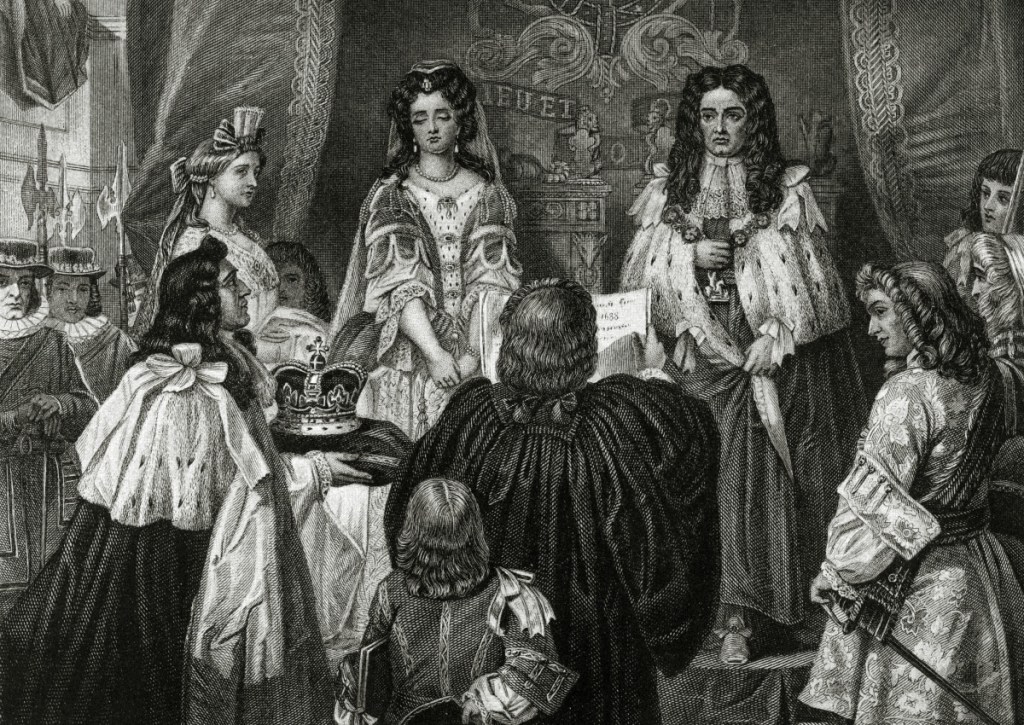
What changed the fortune’s of the British was the 1688 Glorious Revolution. So intent on remaining protestant, Parliament would rather have had a Dutch Stadtholder (essentially Prime Minister, since the Dutch didn’t have a Monarchy) become King of England than James II, the Old Pretender. Not only did this revolution eventually ensure Parliament’s ascension, but it brought Dutch knowledge. Particularly, in regards to banking. Following the Revolution, London’s banking system was modelled on Amsterdam. And they took colonisation to new heights.
And So Britain conquered, had an industrial revolution. Europe’s power was even more profound than before, Europe caught on, and in turn also conquered those areas it previously couldn’t. Africa was carved up, and China abused. Until 1914. Where Empire’s collided, fought, and died. By the nineteenth century, the West’s rise was evident. Yet people insist that this was not a uniquely western path.
But was this true? Can the sum of European dominance be reduced to luck? I think not.
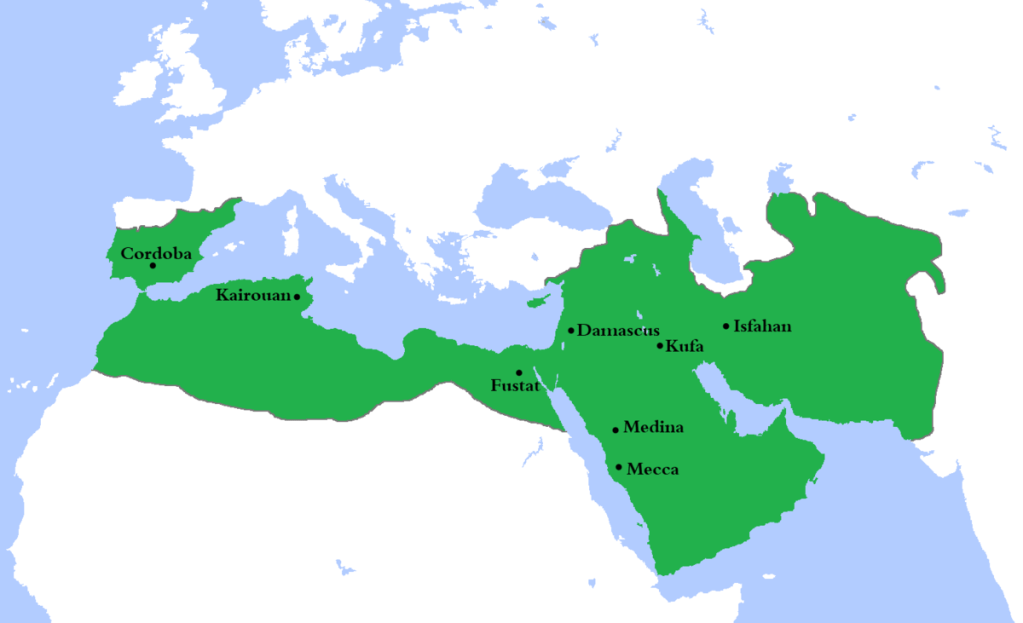
To suggest that European’s achieved this through racial superiority is obviously ludicrous. In fact, the main reason that Europe was able to rise as it did initially started out as a severe detriment to it’s safety – competition between states. Where states like China owned vast territories, Europe was split, distinct and competitive. This can be attributed to the collapse of the Roman Empire. The states that took the place of provinces like Gaul or Hispania where not temporary (as like in China where one state eventually conquered the rest). Whilst men live Charles V got incredibly close to forming a pan-European kingdom, it simply did not happen. Likely because no single state during the immediate collapse of Rome was strong enough to reform it, and by the time states were, the political entities were too fixed and things had changed too much to create a realistic cassus beli in restoring the Empire. And here is where the detriment lies. In that states inability to work together and direct competition between them, caused them issues. When a unified and power-hungry force came knocking like the Umayyid’s, Europe had no answer. The only thing stopping them was their own ability to stretch their empire before they became overextended, rather than any opposing force. Which is exactly what happened with the Umayyid’s. (The Victory of Charlemagne’s grandfather at the Battle of Tours was merely confirmation to the Umayyid’s that Iberia was as far as they should go).
All of this results in these kingdoms developing in different directions with distinct cultures, and an expressed legacy of going to war against each other. And, as a result, a desire and focus on militaristic advancement. It is in consensus among most historians that this became the foundation stone of European ‘progress’. The desire to one-up a neighbour or enemy led to new technology being seized upon, tested in the field of battle and then continually worked on to improve. The advancement in military technology, then had a direct impact on scientific progress. And by the 17th century, with the scientific revolution, scientific progress was no longer merely about attempting to create new ways of killing – but for science’s sake itself. (Likely the Renaissance played some part in this).
The printing press’ development was also a key tool that Europe had. Not by accident did The Reformation emerge. Whilst the printing press was developed in China, it simply did not take off in the same way that it did in Europe. The flow of conflicting and different ideas from The Reformation fundamentally changed European history. Ideas became more individual, debate became commonplace, and dissent much harder to crack down upon. This worked in Europe’s favour as new ideas would be spread much farther than previously, allowing for further advancement. The question is, why didn’t China follow suit or develop in much the same way, considering it had developed a printing press first. First of all, language. Since China’s language is based off symbol’s for words, and not mere letters that are rearranged, it is incredibly hard to use a printing press with the same speed and efficiency that Europe could. And secondly, those who could read and write, namely the clergy (and equivalent in China – Confucian scholars), while often being advisers and having contact with the state in Europe – never worked directly within the state, for the state. Whereas in China, those that worked within the state had to be examined on their Confucian ideals. It is far better to have an efficient bureaucracy where everyone agrees than to have one where people are arguing about what Confucius meant by a specific quote.
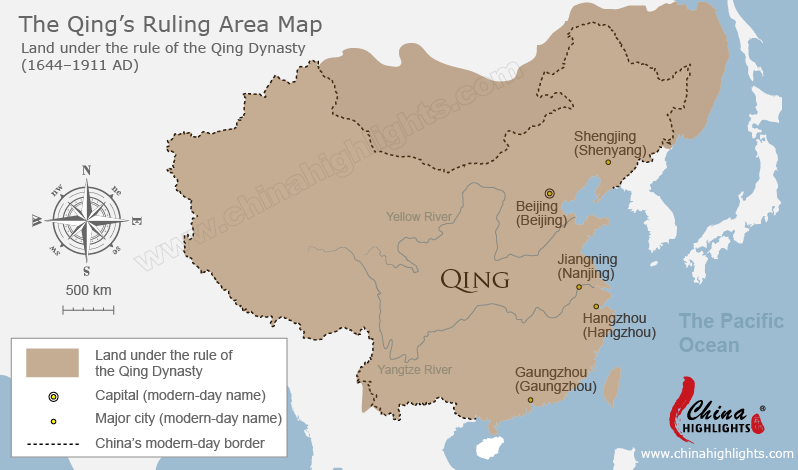
Furthermore, the impetus for China to have a focus on military advancement simply was not there. Following Mongol conquest, with China being at a similar size it is today; China had no such rival that could match it’s power and so there was little need to invest in military advancement. This becomes especially true when considering Chinese ‘Jupiter’ tribute system – keeping its neighbours both placated and subservient to it. And since it did not notice the rising power of Europe, it simply ignored it. Until it was too late to ignore. By the time of the Opium Wars in the mid-19th century, the Qing state had essentially just stopped investment into its navy – which made easy pickings for the largest navy the world had ever seen – the British. The Chinese had no use for overseas colonies – it saw itself as the centre of the universe, and its focus internal expansion on the continent – something much easier than possible in Europe.
As for the Ottomans, their story is much the same. While Europe’s system of royal inheritance was secured, the Ottoman one was not. Consistently following the death of a Sultan, multiple claimants to the throne would appear, and bloody civil wars would erupt. It was common for a new Sultan to purge any family members they deemed a threat to his reign. Such political instability was not healthy for an economy in the long term. But it cannot be solely attributed to the reason the Ottomans eventually fell in power. in comparison to Europe.
The true reason has already been touched on – the gradual displacement of trade from the Silk Road to the sea routes. Why the Ottomans did not follow European example and attempt to make colonies, I do not know. Perhaps it was that, after the initial panic that their trade would disappear showed not to be true in the early days, they did not act upon it and just assumed they would be okay until it got too late (especially since India and the Ottomans actually benefited from European trade in the early days). In any event, they did not make their own colonies. And eventually Europe took the Ottoman trade out of the equation, with their other colonies around the globe taking out much of what the Ottoman economy relied on (transfer of goods).
While 1683 is often given as the date for Ottoman decline. It was actually the plateau of expansion that showed their inability. Following Suleiman the Magnificent, Ottoman expansion all but halted. And anyone with even a minor knowledge in history understands that the Balkans are a powder-keg. And the powder-keg never disappoints. Maintaining control of such an area was clearly a huge drain on the finances of the Ottoman Empire, and effectively rendered further expansion into Europe negligible, since that 1683 was the first proper attempt, since Suleiman two centuries previously, to expand northwards.
Often, when historians attempt to suggest that ‘The Rest’ was doing just fine, they take micro examples of Ming China or the Ottomans – or even those of the Aztecs and Inca. All of which had their perks, and in many ways were advanced. But they were not in a militaristic way. And it resulted in their genocide. Often their richness came in the culture or societal tradition, rather than a purely scientific one. But to suggest that somehow, this path was not one that only Europe could have taken, in many senses reduce the suffering of millions. The rise of Europe (and the suffering that came with it) was a result of multifaceted causes that all fed into European domination.
The idea of ‘The West and The Rest’ can come across as particularly ignorant. But in reality, it perfectly highlights the reasons for the self-evident rise of the West. Those who attempt to disprove this idea raise the micro as evidence for the macro, and that what is often forms of cultural ‘civility’ is evidence enough that Europe was by no means superior. But this simply cannot be enough. It is precisely because of hyper-aggression and dramatic competition among European states that these things came to pass. When people bring up the above examples, in order to claim equality between the two, it largely seems that they still are afflicted by the legacy of Victorian culture – whereby the only form of ‘Civilisation’ is that of scientific superiority. This is not to say that as soon as Columbus discovered America or Vasco de Gama found a new route to India, Europe instantly became superior. No, not really until the rise of the Dutch and British trading empires can Europe really be considered to start to have had an edge on the rest of the world. And to trace the causes of this dominance is not to say that the first time they emerged, Europe became dominant. The story of global powers is a long one.
 The History Book