The Second World War was a war of intelligence; won through subterfuge and scientific developments rather than sheer military manpower – excluding the Eastern Front, of course.
Following the end of the Desert War in 1943, North Africa belonged confidently in American, British and Free French hands, and the Liberation of Europe imminent. The obvious way to enter Europe, it was clear to all, was through and invasion of Sicily and Southern Italy. Allied forces would make an amphibious landing there, and make there way north, toppling Mussolini and giving them easy access to France.
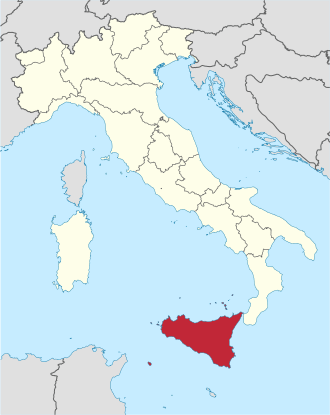
However, obviously there was one significant issue. The Germans knew Sicily was the target. It was the only sensible place for the Allies to land. And as such, the Germans were prepared to divert all their attention there, and defend it well enough to cause great losses on the Allies.
Thus, the Allies found themselves in a conundrum. They wanted to land in Sicily, but without suffering the inevitable bombardment from Axis defences. The man who found a solution to this was none other than Ian Fleming, the to-be author of James Bond.
Fleming was at the time the PA of Rear Admiral John Godfrey, the Director of Naval Intelligence, and it was in a long list of suggestions of ways to trick the Germans, published by Godfrey, that the idea for Mincemeat was tucked away. The premise: to dress a corpse in military costume, carrying fake ‘valuable’ information that the Germans would discover and take as fact. In this particular situation, the corpse would maintain documents hinting that, rather than aiming Italy, the Allies intended to go to Greece, and march through Eastern Europe.
The job of delivering this impossible task was dealt to Charles Cholmondeley (pronounced Chumley) and Ewen Montagu. Cholmondeley had been sent to MI5 after a brief time in the Air Force on account of his immense intelligence; Montagu was a member of an extremely wealthy Jewish banking family with a fierce record as a lawyer before the war. Together, they had to find a body, successfully manage to dress it as a naval officer, and convince the Germans that they were headed to Greece. Easy.

It transpired finding a body that is fresh and has no visible cause of death is actually quite difficult, but eventually, through scouring the morgues of London, Montagu found the body of Glyndwr Michael, a Welshman who had committed suicide by sulfur poison. Sulfur poisoning was perfect- it left no visible trace, and would be easy to pass off as a sailor who had drowned at sea.
Glyndwr Michael, now called Major William Martin of the Royal Marines (it was deliberately chosen on account of being one of the most common names in the Navy), now needed to look like a soldier. With his uniform designed to fit, his undergarments borrowed from a recently deceased Cambridge professor, and a wallet filled with forged IOUs, receipts and cards – he was almost ready. Now all he needed was a personality.
Major William Martin was engaged, they decided. Having borrowed a photo from MI5 clerk Jean Leslie, they created Pam, Martin’s long-time partner to whom he intended to propose after completing his mission – delivering a very important letter to the Allied forces in Africa. Interestingly enough, Montagu struck up a brief lover’s fling with Jean Leslie, referring to her as his Pam, and kept a copy of the photo by his bed.
With Martin created, and his wallet and pockets filled with enough information to make him seem human, Montagu and Cholmondeley requested that Lieutenant General Archibald Nye write a letter to General Harold Alexander in Tunisia, speaking of the plan to lead the Allies into undefended Greece. This letter was put in a sealed envelope, and put in Martin’s suitcase.
Martin was dropped off on the coast of Spain, a country that claimed to be neutral but in practice was actively collaborating with the Nazi regime. There, he was picked up by a fisherman, and German intelligence stepped in.
Montagu and Cholmondeley had chosen their spot well. Martin’s corpse had been abandoned where Adolf Clauss, Germany’s most effective intelligence agent, operated. Clauss worked under a man called Karl-Erich Kuhlenthal, a Jewish German agent in Madrid who was understandably so paranoid about losing favour with the Nazis, that he was willing to exaggerate the reliability of all intelligence that came his way. He was, naturally, the target of a great many Allied operations over the course of the war.
Kuhlenthal rushed to claim Martin’s corpse, and upon discovering the false Allied plans, eagerly convinced himself that he had stumbled across something remarkable. He overlooked slight discrepancies, such as Martin’s body showing clear signs of having not drowned at sea. An obituary of Martin published in a British newspaper commissioned by Cholmondeley was all the proof he needed to decide the letter was genuine. Kuhlenthal personally delivered the news to Berlin.
Hitler had some oddly misplaced trust in Kuhlenthal, and his arrogance meant that when Karl Doenitz, the leader of the German Navy, attempted to convince him it was almost certainly a ploy by the British, Hitler personally dismissed it and sided with his apparently prodigal agent. German troops were diverted from Sicily to Sardinia, Corsica and Greece, the three places all named in General Nye’s letter. British intelligence discovered this diversion through its wiretapping at Bletchley Park, and with the simple message ‘Mincemeat swallowed’, MI5 learned that all their eccentric work had paid off. The Sicilian Invasion was launched days after. The British had predicted as many as ten thousand casualties. A seventh of that were recorded. Of the 300 ships they had predicted to lose against anti-naval defences, only 12 were sunk. The campaign was a victory, and Mussolini fell from power soon after.
Mincemeat is often described as the most successful intelligence operation of the war, and it very likely is. Popularised by Montagu’s post-war account of the operation, The Man Who Never Was, it was made into a film in the fifties, and has witnessed a resurgence in popularity thanks to the book Operation Mincemeat by military historian Ben Macintyre. With its eclectic details and eccentric characters – of which I have only mentioned a few – Operation Mincemeat has managed to capture our imagination in a way modern spy story writers could only dream of.
 The History Book