Religion has been one of the most constant, powerful and unifying forces in human history. Yet it has also been one of the most tyrannical, despotic and evil forces to ever grace the Earth. When one thinks of the crimes of Religion, a myriad of examples come to mind – from the Human Sacrifices to the Sun God in Aztec South America, to the chaining up of innocent princesses to rocks in Greek Mythology. Religion is used as the rallying call; think of the Crusades, 30 Years War, the ‘God given’ right of Manifest Destiny. And yet we, as humans, continually and perpetually bow down to one monolith or another. So just how did this happen, and why does it still hold true, 200,000 years after Homo Sapiens arose?
Obviously this essay will have a slight of conjecture about it. In writing a history of religion itself, we shall have to delve back to before the written word itself. However I am not coming into this blind. Historians, Archaeologists and Anthropologists have come up with many theories explaining this, which I shall attempt to give my best take on what I think the most likely explanation is. My primary source for this essay will be Yuval Noah Harari’s ‘Sapiens’ – A book I recommend to anyone interested in studying anything related to us Homo Sapiens. Harari defines religion as; ‘a system of human norms and values that is founded on a belief in a superhuman order’ – in that a religion must come from an authority – supposed or otherwise – that is beyond us; the best example being the God of Classical Theism.
It goes without saying that Homo Sapiens are the only species on the planet that can form religions, of which I shall explain. I do not know whether the other members of the ‘Homo’ Genus had created, or even had the capacity to create religion, let alone build upon that to create the structures of Churches and Mosque’s we know today. Unfortunately such information is quite hard to find out, because whether through disease, inbreeding, or simply hunting and killing other Homo Genus’, Homo Sapiens (Or, as I am told; Homo Sapiens Sapiens to be precise) are the only ones left in existence. As a side though, we know that Homo Sapiens did breed with the other types of Humans, and so Native Europeans have a slight % of Homo Neanderthalensis (Neanderthal) DNA in their bodies, and Eastern Asian the same with Homo Erectus.
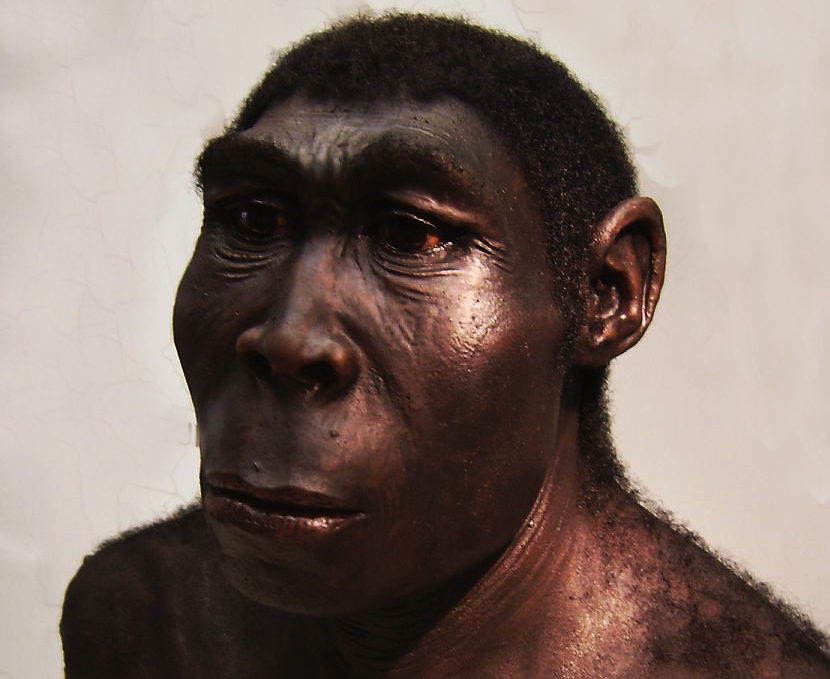
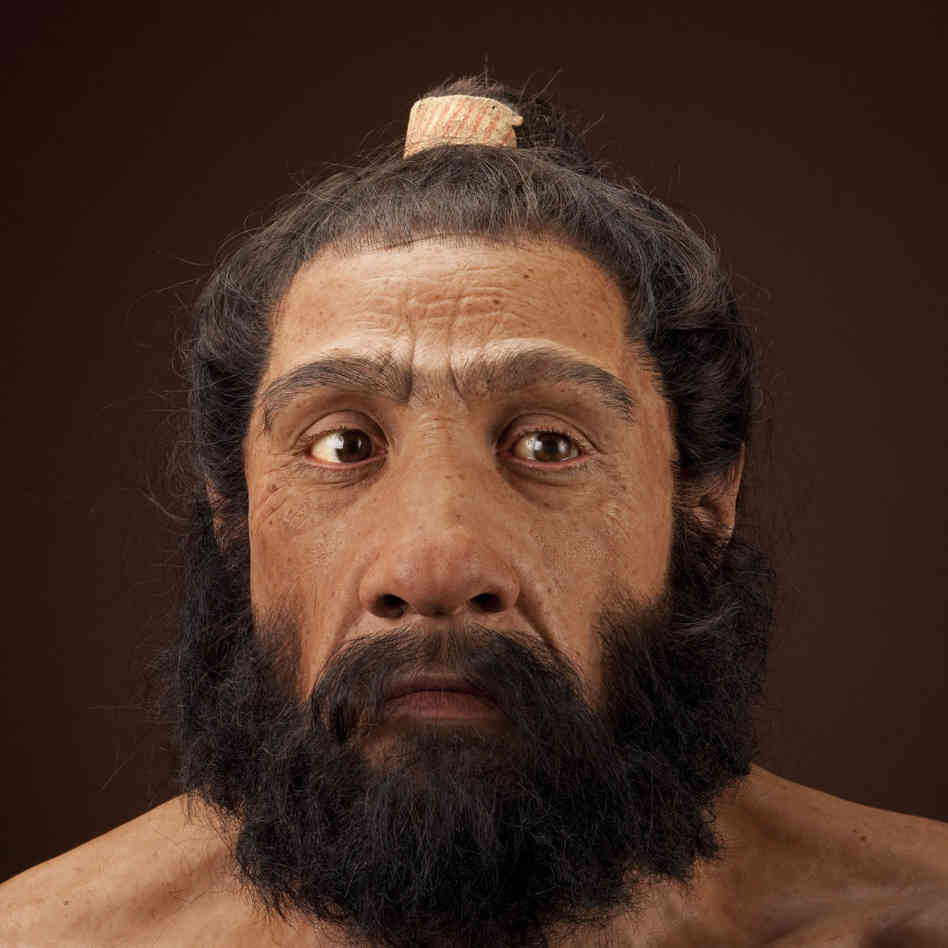
So, after three paragraphs, I still have not reached the central topic: How did Religion arise in Homo Sapiens? Well, as we all know Humans first came about in Hunter-Gatherer tribes. Foraging for their foods, and hunting for the rest. The traditional histories say that life expectancy was around 30 years old at this time, however Harari argues it was often as high as 80. Regardless. Humans are different from other animals in that we can operate in relatively large numbers, but also have the close bond of intimate animals. Harari, in explaining this compares humans to bees and chimpanzees. Like humans, bees can operate in huge numbers. However unlike bees, humans remain a level of autonomy and intimacy with their kin. We are not a hive mind, where individuals are void of expression. We think, we feel, we love. So then we must be more like the chimpanzee, correct? Partially. Chimps can, like us, think and feel and are autonomous, they have families and groups that somewhat resemble ‘tribes’. But they simply cannot work in large numbers. Harari uses the example of a football stadium. You could not put 50,000 chimpanzee’s in a Stadium and expect everything to go swimmingly. Far more likely you’d have 50,000 chimpanzee’s trying to brutally murder each other with whatever they could get their hands on.
Anthropologists suspect that the maximum limit of human interaction is around 150 people. After that, we peak. We simply cannot hold bonds strong enough with more than that. This however is far, far higher than the chimpanzee. And human groups (Setting aside religion), can be much larger. The answer to this is gossip. Yes, gossip. That thing we associate with teenage girls is what built human civilisation. When in a big group, a human must be able to know who they can trust: who’s a con, who’s a thief, et cetera. While the Chimpanzee must know a lot of information about another chimp to know whether they can trust them, the human can simply gossip with those they do trust, about who they can and cannot trust. But even this cannot build societies like we know today that actually function. And, finally, this is where Religion comes in.
Religion wasn’t a new concept when the first societies were forming in the Mesopotamian basin. Hunter-Gatherer societies had, for thousands of years had religions. But these were localised. They were spirits. There was a God of a specific mountain, as opposed to the God of mountains collectively. A Goddess of a specific berry as opposed to the Goddess of all of agriculture. And there was no collectivism about it. While in the later civilisations of Egypt and Greece (Mesopotamia is slightly different because it was a collective of civilisations that, while having overlapping Deities, were not the same), different towns and cities could share in their collective Deities; these spirit Gods were not the same. Each tribe had a different God for everything. Some plant-life and particularly animals were often also considered to be Gods. Perhaps a particularly large tree was its own God to one tribe.
But Gods of specific plants was not enough. As humans began to collectivise into societies with the cultivation of wheat and barley, collective Gods needed to be established. We can see what kinds of religions these were through Egypt. Egypt itself is one of the best societies to learn about the very early societies – because it was one itself. Egypt alone survived the Bronze Age Collapse, and give or take remained the same. It transcends the separation between Bronze and Iron Age Civilisations, and gives us an insight into the former through documentation of the latter. As we know, many of the Egyptian Gods had animal heads – and this is precisely what most Bronze Age Civilisations had too. Think Anubis – God of Death and his Wolfs head, or Thoth – God of Wisdom – and his bird head. Indeed, it was often customary within the Mesopotamian basin, that warring states would attempt to steal the icon of the God of another state. Perhaps the Hittites might steal a statue of Marduk from Babylon. These were physical representations that gave the idea that one state was superior to the other, as they “owned” the others God.
Civilisations such as these enabled thousand – or more often tens of thousands of people – to work in the same society cohesively. Why? They united people under the same common factor. What I mean by this is that, if we look at the definition of Religion I provided above, the rules of society were not ordained by humans themselves, but by a higher power whose jurisdiction was greater than any King. Of course, there had to be people who connected the people to the Deities – which is where Priests and Oracles and Prophetesses and such like come in. Similarly too, the Monarch of a society was connected – he was the ordained monarch by the Gods. This is obviously something that would be carried down through the ages – indeed Shakespeare’s Macbeth can be considered in part a commentary on the ‘Divine Right of Kings’, and later, John Locke would write a damning critique of this idea in his Treaties of Government.
But themes exist about these new Gods. They were over things we, as humans, cannot control. The Volcanos, the Weather and suchlike. What was beyond Human dominion belonged to the Gods. Gods would also have multiple roles (such as Hermes being of travellers, thieves etc.) – sometimes even overlapping such as Hera and Dionysus both being Gods of Madness. This can largely be explained through the fact that most of these Gods had their stories changed throughout the centuries. For example, in Mycenaean Greece, Poseidon was King of the Gods, it’s only after the Greek “Dark Ages” between 1100-900 bc after the Bronze Age Collapse where Zeus becomes Head God. Anyway, tangent about Greek Gods aside, a Pantheon or Polytheisms of Gods are based off that which we as humans can not control. While most people will associate polytheistic societies as probably more violent and war-loving than their monotheistic counterparts, this is not always the case. Take, to use a Medieval example, the Vikings, and particularly Guthrum. After Alfred got Guthrum to surrender, he demanded that Guthrum convert to Christianity. Now for a Monotheist, this would be sacrilege, converting to another religion. However for the polytheistic Guthrum, he simply accepted; just adding Jesus to the Pantheon. He already believed in a bunch of Gods, what’s one more?
Within the Ancient Societies, it was not uncommon (albeit at varying degrees) for atheism to be accepted. Traditional Greek myths held that once the heroes of Heracles, Jason, Atalanta and others had rid the world of monsters, the Gods would shut themselves off from the world and only influence things indirectly (Which amounts essentially to a Greek attempt to explain why Zeus didn’t just pop down for tea one afternoon, or perhaps a more appropriate one; why he didn’t impregnate every Princess in Greece anymore). While Socrates was executed for apparently ‘corrupting the youth of Athens and disrespecting the Gods’ – its more likely that it was due to the fact that in his dialogues, he ended up making many powerful enemies and they resorted to the usual charge against philosophers as they couldn’t really prosecute him with anything else. But other philosophers were indeed also atheist; Epicurus, who developed a precursor to the inconsistent triad: “Either God wants to abolish evil, and cannot; or he can, but does not want to. …If he wants to, but cannot, he is impotent. If he can, but does not want to, he is wicked. …If, as they say, God can abolish evil, and God really wants to do it, why is there evil in the world?”, Aristotle was also a sort of atheist, in that he rejected traditional connotations of God and his ‘Prime Mover’ was more of a spiritual force rather than a physical Deity that one would associate with Zeus or Hera. Aristophanes the playwright, Protagoras and yes, even everyone’s favourite barrel-dwelling, chicken throwing cynic – Diogenes were also all atheists.
Rome also did have some heavy atheistic elements, however the centralised nature of its state meant that religion (and by extension, atheism) tended to become more politicised than in Greece centuries earlier. However atheism was not unseen, Romans tended to care more about different religions, as seen by the continual persecutions of both Christians and Jews.
One may, somewhat justifiably, assume that the progression from Polytheism to Monotheism was a natural, somewhat inevitable one. However this is by no means the case. The Roman conversion to Christianity only came thanks to the Third Century Crisis. When Rome was beset by climate change, famine, political collapse, civil war and foreign invasions, the peace loving Christian Church that helped those in need seemed like a bastion of hope for the provincial Roman people. That’s why so many people converted. When the Roman elites were busy killing each other and civilians, Christians came to help, the elites seemed out of touch, and by extension so did their religion. It was seen as evil (probably encouraged by Christians), compared to the peaceful Christians. Likely admiration that Christians still existed despite centuries of constant Roman purges helped too. By the time Diocletian’s Tetrarchy came onto the scene, a considerable portion of Roman citizens were Christian. Sources vary, but anywhere between 1/3 and over a half were Christian.
Most will know the story of Constantine and Milvian Bridge – the night before the battle, so-say he had a vision, and the day of the battle he told all soldiers to paint on the first two letters of Christ’s name in the Alphabet – Chi and Rho. He won the battle, and converted to Christianity; becoming Rome’s first Christian Emperor.

From there, the history of religion becomes a little more familiar to us. Early Christian schisms split the Church between East and West, and Christianity as a whole consolidates its hold on Roman Europe, even extending beyond.
The Middle Ages were a time of serious Religious power. The Crusades are evidence of both this and how Monotheism is often very violent, as there can only be one God, anyone who disagrees with you essentially must either convert or die (to put it in a very crude, simplistic and Medieval sense). The Church in Rome and Church in Constantinople also held considerable sway over the day to day lives of Europeans, and they were not always benevolent in this, through the Indulgences for example. By 1517, Church power had grown so much that Martin Luther published his 95 Theses, and began a second widespread schism, between Catholics and Protestants. What benefited Luther the most was the invention of the Printing Press, which allowed him to spread his translations (and also his beliefs) across to many people. Before the press, manuscripts had to be copied down by hands, and this role usually fell to the Monks. This meant the clergy had a virtual monopoly on what could and could not be seen by the populace (benefiting them was the fact that most people were illiterate, the press would also begin the process of changing that). Atheism however was virtually non-existent in Medieval Europe as people who were got burnt at the stake or met other similarly gruesome fates.
The Enlightenment had many causes, however two of the more important ones (in my eyes at least) were the invention of the printing press. Obviously, as said this allowed anyone with the funds to spread books, pamphlets or whatever other literary form they wished quite easily. The second came with the creation of Protestantism. See, in Protestants questioning the credibility, authenticity and legitimacy of the Catholic Church, they inadvertently set precedent for anyone to do the same, only this time of Christianity as a whole. In the end, the Enlightenment created the society we see today, as the West is built upon the principles established in these 2-3 centuries of Philosophical thought. The questioning of religion has created a society whereby a significant portion of people stand in opposition to the establishment’s status quo, much like in the Crisis of the Third Century in Rome. Where the Roman Pantheon lost ground to Christianity, now Christianity is assailed by Atheism.
The Enlightenment culminated, I think, in Nietzsche’s quote that “God is dead, he remains dead, and we have killed him”. What Nietzsche meant by this is that the traditional Christian order societal order that existed has been demolished, it cannot be brought back and reestablished as is, and it is us, as humans who have done this. Fundamentally, Religion holds the keys to moral order is society. By having a Deity that is beyond human comprehension establish what should and should not be done, what is good and what is bad, gives a moral code objectivity. Ethics such as Utilitarianism or the Situalationalistic Ethic codes that people often find now just do not cut it. They are subjective, too open to human interpretation and error for them to work on a scale that can bind humans together, as I established Religion was created to do earlier. This is why, and quite legitimately (though I’m not sure I fully agree) many people have claimed that the demolishing of the Christian order and replacing it with nothing has been the very long-term cause of the degradation of moral order within society, and why it no longer seems to function as it once did.
We, as humans continually subject ourselves to religion, despite it often not being to our perceived benefit, because in the end it is the glue that holds a society together. Whether it be the Christian God of Classical Theism, the Neo-Theism of Christians, made for a world of science, Buddhism, the Greco-Roman Pantheon or a collection of nature spirits, they have all served the same purpose from an objective, outsider point of view: to collectivise society between a Common goal. Humans, by nature are individualistic. We seek to only benefit ourselves and our family, which is why we gossip with others, to find out who can help us reach that. However it is religion that constrains these urges, we submit ourselves to it, (in doing so offering up some of our Natural Rights) to give ourselves security.
With the destruction of the Christian order, then, perhaps its only a matter of ‘when’ and not ‘if’ of whether something new, being an objective moral code, will come along and replace it. Apologies if the essay changed focus slightly, I wrote the first half a month ago and haven’t picked it up till now, but still – I hope you enjoyed!
-Han
 The History Book