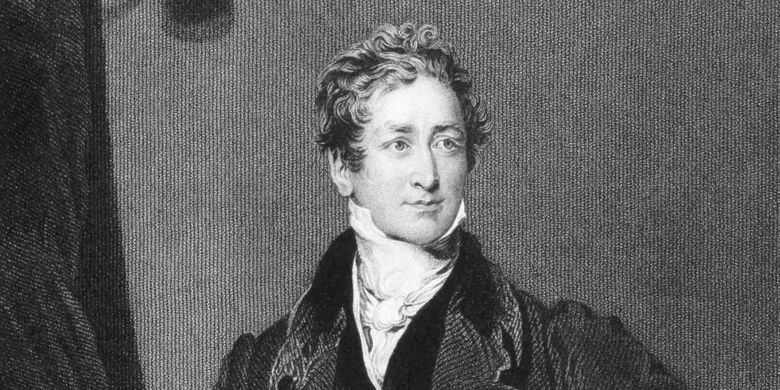
In the town of Bury, Manchester stands a monument to perhaps the greatest Prime Minister of the 19th Century, and certainly my favourite. For in Bury, stands a statue to Sir Robert Peel; Prime Minister between 1841 and 1846. This was the Prime Minister who stood in direct opposition to his party, to pass something he believed was right. This was the Prime Minister who splintered the Conservative party for a generation, with his repeal of the Corn Laws. Never before, nor since, has a Prime Minister ever had the courage to do such a thing.
However if you had have asked a contemporary in say, 1830, on who was the most likely Politician to repeal the Corn Laws. Peel would not have been on that list. Throughout the 1820’s, Peel adopted repressive policies. His coercion when he was Chief Secretary of Ireland from 1812 to 1822 was rather excessive. Being only subordinate to the Lord Lieutenant of Ireland, Peel was effectively Prime Minister. Though interestingly it is here he first experimented with a Police Force with his “Peace Preservation Force” (PPF). Peel also spoke vociferously against Catholic Emancipation, one other three big issues of the day facing Britain (The last being political reform). His opposition to Catholic Emancipation became so big that he and Daniel O’Connell (The Politician most responsible for Catholic Emancipation) developed a deep and personal enmity. In fact, Peel and O’Connell were set to have a duel (same as when Aaron Burr killed Alexander Hamilton) and this would have gone through if not for O’Connell’s arrest by the Government.
Quickly, for those who don’t know – Catholic Emancipation was the ‘Freeing’ of Catholics. Anti-Catholic laws were introduced in the Late Stuart era, due to King James II’s Catholicism (which Parliament hated), which in turn caused the Glorious Revolution and the Bill of Rights in 1689 (Which is a topic I shall definitely attempt to cover in the future). Following the Glorious Revolution, many Anti-Catholic laws were introduced, preventing Catholics from any kind of political or civil authority office and such like. It was done to stop Catholic influence within England at the time, but by the 1820s and 1830s had come around, Catholicism was a minute and negligible part of the population in Britain, the only place it really had any effect was Ireland – a majority Catholic part of the United Kingdom. Many politicians had attempted to ‘Free’ the Catholics through Emancipation. Indeed, William Pitt the Younger famously tried in 1801 to accompany the very Act of Union itself, only to lose the support of King George III and resign as a result, ending his 17 consecutive year run as First Lord of the Treasury (As the role was known at the time).
The Corn Laws meanwhile, were a set of Laws introduced in 1815 by Lord Liverpool after the Napoleonic Wars to protect the price of British agriculture. In layman’s terms, they artificially put up the price of foreign foodstuffs entering Britain through the use of tariffs. In doing so, prices of food were artificially high which negatively affected the poorest members of society. Least to say, they weren’t much liked by anyone other than the Landed Gentry (who, funny enough, were the ones who got the bill passed). Peel had been very quiet on the Corn Laws, but seemingly was against them due to his associations.
Throughout the 1820s, when Peel became Home Secretary after Lord Sidmouth’s retirement, Peel associated himself mostly with the Duke of Wellington – famous for his refusal to reform Parliament (he even tried to strike down the Great Reform Act). Those in Liverpool’s Cabinet who supported reform to both Catholic Emancipation and the Corn Laws – the F.J. Robinsons, William Huskisson’s and especially the George Canning’s of the world, were Peel’s opposition within the Cabinet. When the Tory party split after Liverpool’s resignation, Peel would side with Wellington and the Tories, not Canning and the Liberal Tories. By 1829 however, Robinson was a spent force and both Huskisson was outside of the Party, and Canning was dead. Thanks to Whig opposition, and the threat of a 17th Century style Civil War in Ireland, Wellington and Peel managed to ‘stumble’ (as many historians put it) into passing Emancipation. Much to their unwillingness.
Throughout the 1830s, the Whigs dominated Parliament and so Peel spent his time rebuilding the Tory party after it shattered over Catholic Emancipation. A new lifeblood of young Conservatives would enter the party, largely from Middle Class backgrounds, such as the future Liberal Prime Minister, William Gladstone. Peel managed to transform the Tory Party into the forward thinking Conservative party. By 1841, people had gotten so sick of Lord Melbourne’s blunders that Peel and the Conservative’s became the first Political Party in history to become the Government immediately after an election. (Usually it would take a few months for the current government to collapse, before the larger party could take over).
No one quite knows when the politician opposed to Catholic Emancipation became such an ardent supporter of Free Trade and the repeal of the Corn Laws (Not that he dare say that beyond his close circle of trusted advisers, remember that the Conservative party was still the party of the Landed Elites). In fact, such has been the subject of debate among historians for a while. Some like Boyd Hilton, argue that the change of heart came at some point in the late 1830’s, and the planning for repeal began as early as 1842. Others, like Trevelyan argue that it only really came as a result of Political pressure.
Regardless of what caused Peel to change his mind, the Irish Potato Famine was the catalyst that would cause Peel to come in support of repeal. Briefly, so you are aware. A particularly rainy season across Europe created the perfect conditions for a Blight (essentially a fungus) to infect Potatoes. All of Europe was affected, with most countries experiencing upwards of 50% crop failure in the potatoes. What made Ireland particularly sensitive however was that fact that Potato farming was essentially its only source of agricultural produce – it was the only thing they grew (Due to the climate of Ireland – it was very wet naturally so it was hard for wheat to grow) – but also, because of Centuries of repressive policies from the British. Ireland, when it caught the blight had between 95-98% crop failure, depending on sources. I could go at great length in discussing the Irish potato famine, but this article is about Peel and it’s long enough already so I shall move back onto the subject.
Peel, decidedly used the Famine as an excuse to repeal the Corn Laws. This was something he knew wouldn’t be taken well by his party. But he genuinely believed repeal would help Ireland as they could now access cheap foreign foodstuffs. (Even though it didn’t, as the Irish had no money to actually buy cheap foreign corn, Peel still believed it would help, at least in the long term. Perhaps he would’ve given more aid to Ireland, had he continued on as Prime Minister) Where, as Hilton argues, “At this stage he was probably contemplating reductions in the Corn Laws in 1842… so that in the election due in 1848 he could carefully dislodge himself from protection… Final repeal might come in 1851 or 1852” However, Peel took his chance to One; help Ireland in the best way he thought he could and Two; usher in a new era of Free Trade, which he was now an ardent supporter of.
Undoubtedly, Peel thought he’d receive opposition from the Conservatives, but his base was strong and he assumed many would be able to be turned to his side. Oh how wrong he was. Lord Bentinck, who had never really spoken much in Parliament, and had mostly supported Peel, suddenly became incredibly antagonistic towards Peel and opposed it entirely. A young rising star within the Conservatives named Benjamin Disraeli (Another future Prime Minister) also used his unrivaled ability of oration against Peel, despite almost all evidence suggesting that he was actually Pro-Repeal (evidence suggests that he was simply doing this to make a name of himself within the party). The issue of repeal consumed Peel.
Peel eventually did manage to pass the Repeal of the Corn Laws in 1846, but not without a cost. Bentinck, Disraeli and the others quickly found an excuse and forced his resignation. Peel would die in 1850, but never again would he hold any position of political power. He was a disgraced force.
Peel’s decision to go against Party policy and introduce repeal, and then carry it through despite huge opposition. Following repeal, the Conservative party would split again, divided between Peelites and Traditionalist Conservatives. The two essentially became separate parties. Some Peelites would eventually return to the fold, though many, Gladstone being the most notable, would never return and join with the Whigs to create the Liberal Party in the 1860’s.
Peel’s decision here is one of the most notable and most important parts of British history in the 19th Century. As I said before, never before or since has any Prime Minister gone against their party over such a big issue. Never before nor since has any Prime Minister had the courage the courage to do so. Peel’s legacy in the Conservative party has now been restored to what it should be. But his story is being forgotten by the populace and I think this is an incredibly saddening thing. Peel is now only remembered as ‘The dude who made the police’, but his legacy should be so much more than that. We should remember Peel, for his bravery and his sacrifice. He destroyed his political career to do the moral thing.
Sir Robert Peel was the politician who did what was right, despite it being unpopular. Many politicians have forgotten this legacy and it is something we, as voters, should remind them of. Politicians should be more like Peel, less worried about their parties and maintaining their seat as Prime Minister, and instead be worried about doing what is best for we the people.
So if you ever find yourself in Manchester, please make try to visit the town of Bury and find the statue of the bravest politician in British history, and give him your thanks.
 The History Book
Love this article! After studying Peel he really did start to usher in modernisation of the British society as well as the repeal of the corn laws, as you said.
LikeLike
Read this instead of maths revision. Don’t regret it.
LikeLike
Thanks!
LikeLike